Dent Repair USA's Logo Trade Marked

Dent Repair USA Cost Effective Dent Repairs, Today.

Dentology: Creating Rules from Mapping Microdynamics
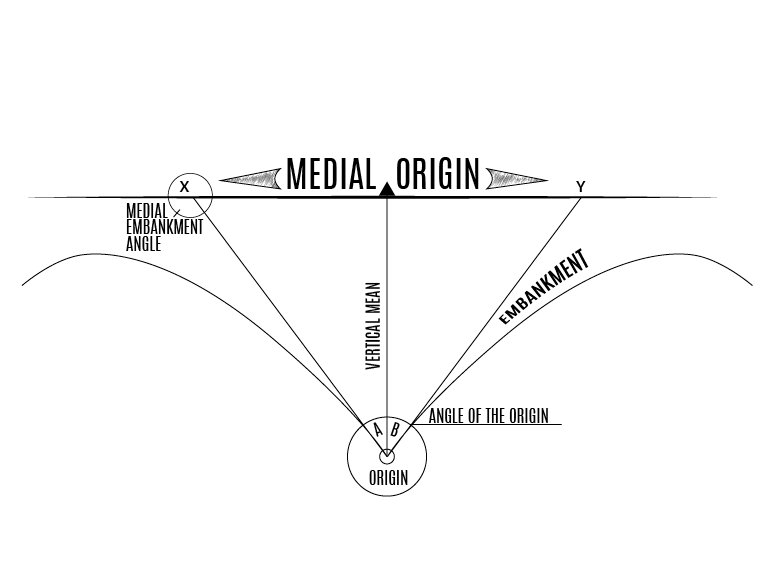
A structural analysis of microdynamics

Dentology


Dentology, is a branch of auto body repair, dealing with the removal of minor pressure blemishes to metal, through a scientific method, commonly referred to as paintless dent repair. It deals with, but is not limited to, the process of restructuring metal on a vehicle to its original state, after a minor impact or push.
Dentology primarily deals with two types of dents, perforated and protruding, with two primary causes dynamic denting and quasi-static denting; together, they contain endless subcategories and varieties. This branch, defines a dent or ding as any discontinuity to a panels resistance and stiffness from its original factory setting. Which is typically created by hail damage (dynamic denting), or by structural frame resistance caused from "door slamming" to the outer shell (quasi-static denting).

Mapping Micro and Macrodynamics

Dents are further defined by size factor mapping: breath, length, depth, location, metallurgical alloys, paint, structural obstructions, and environmental variations. The size factor mapping of a dent, is primarily focused on the shape and form of this discontinuity. Perforated dynamic denting is by far the most common, defined as pushes from the outside in, and caused by a number of factors that a vehicle will encounter, from the outside world. Protruding dynamic denting is far more rare, at least as a stand alone: often accompanying large dents when bracing is struck from pushing the outer shell into the bracing. That is to say, together these two types of dents create macrodynamics, which is the study of complex dented structures as it relates to dentology and microdynamics, which deals with simple dented structures.

Mapping the Origin

Microdynamics deals with the most basic shapes encountered within dentology: namely, triangles and circles. Since triangle dents are by far the most complex of the two, lets briefly touch on their structure. The contour of the origin both laterally and diagonally, is the deepest point of the origin; its caused by the shape of object that struck the panel, in this case triangular. The path of the object which struck the panel affects the depth of the dent and angle of the strike vertically and laterally. This is important because it helps up reverse engineer the damage at least in theory. The process of reverse engineering a dent is known as reversing the origin, while the entire process of identifying the contour of the origin is called mapping the origin or simply, mapping. Either way, mapping's entire purpose is to reverse the origin. When dealing with triangles we start with the trench.

The Trench

The trench or "path of the origin" of a crease is the lateral origin along its length and includes any and all damage attached along its line. The trench does not refer to the bottom of the crease as a whole, but rather the entire damage to include the teardrop or point of entry. These trenches have walls which are attached to the undamaged portion of the repair surrounding the crease. This is referred to as the bank or simply the embankment. The embankment, although relatively flat is still affected by the crease due to the displacement of metal, which we will not be covering here. Perforated and protruding creases are vertical structures defined by the origin and its relation to medial embankment angles. A crease has two separate origins. 1) the lateral origin which is the trench or lowest point that runs with the direction of the impact. 2) medial origin, which starts on one side of the trench and runs to the other high side of the trench through the origin. The vertical mean is always cut in half and creates two right angles cutting through the center of the crease. This allows us to mathematically determine the exact angle of the origin, based upon the medial origin and hypotenuse embankment. The medial origin has two medial embankment angles on each side determined by the angle of the origin, for brevity sake we call them alpha/bravo banks. As a result we can begin to define rules, such as: 1) Do not fold the embankment over the origin. 2) Always open the embankment instead of closing. 3) Make passes on the lateral origin along the path of the origin. Just to name a few.

Read More...

A Dent Repair Fable: The Factory, The Specialist, and the Painter

A Dent Repair Fable: The Factory, The Specialist, and the Painter


There are many types of Paintless Dent Repair technicians, just like in any other line of work. For example, a man may be a baker at a factory, but that doesn't necessarily help all customers out. If someone needed a birthday cake for a loved one, they may ask the factory worker, to make them a cake: lets say he charged 20$, for the trouble. If they don't care about the quality of the cake, all of the special trimmings or taste, then that cake may have been a perfect choice for them. Many dealerships, large dent repair companies, and auctions fall under this category. Its often hallmarked by extremely low pay for the factory worker, golden handcuffs, and poor quality repairs.

Now lets look at another type of baker: the specialty baker. Someone who has dedicated their life to baking nothing but the very best little treats. They have perfected every recipe and built a large local clientele. They have honed recipes over decades to bring his/her customers the very best. Often this means staying on the cusp of new innovations and tools, working extremely long hours solving problems with newer techniques, and staying in community with the worlds best technicians.

Its safe to say that the specialist is in a completely different world, than the the factory baker. In fact, its not even the same sport. The customer is looking for a home run from a pro, but they find a wall of misguided information. They don't know what to do, so they do what anyone would: they look for the best price tag. They ignore the throngs of positive reviews for the specialty baker, once they see what he charges. They walk away angry and upset with the specialty baker and go back to the factory baker. Feeling pleased with themselves they pay the 20$, again. The wedding day comes and when the cake is presented, its no better than the birthday cake. Its a complete disappointment. They then run to the specialty baker for a solution but to their dismay, the price is even higher: so they turn to the real villain.

Now lets move that analogy into the realm of Paintless Dent Repair (PDR). There are hundreds of auction, dealership, and commercial paintless dent repair technicians, and their primary goal is to bake 20$ birthday cakes. They even celebrate their extremely low costs, but there is something hidden in those low cost (Your getting exactly what you paid for, factory cake). They have built their entire endeavor around making dents "look different", but that may not help you when the wedding day comes, and its your 50,000$ vehicle on the line. However, there is much more to this story: namely the body shop or painter.

The terrible truth is, when dealerships and auctions, are hard pressed for a perfect PDR repair, they often call in the specialist. The stakes could not be higher, especially when it comes to the safety of your vehicle. Specialty technicians do cost more, but the results are lightyears apart from the factory worker. There is good reason why the specialty tech has throngs of reviews and positive feedback, namely huge savings. You see there is a villain in this story and its not the factory or specialty tech, its the Painter.

The painter wants to charge 6000$ and run your wedding ceremony, along with your line of credit (to your insurance company). They want to hold your cake for months at a time, and wave at you from behind a telephone. To make matters worse, many body shops don't do what they say they will. Its very important to take your vehicle to another Body Shop after they finish, to ensure you got a good job. In truth, the painter is not actually doing you a better job in some cases.
In reality, he is not baking you a cake at all. He is ripping your cake apart and putting it back together with his fingers and a scapulae: you see, this is, in fact, why he cant just bake your cake all alone. He must also recreate the plate it's sitting on, by shattering it. I know it sounds crazy, but that is whats happening, in many cases. Since they cannot get a perfect match on your cake, they simply "blend" everything else around it to make it look the same. This unfortunately damages the value of your vehicle, all of your perfect cake is now repainted (To create the illusion that your damaged portions "look" similar.).

And this is why Specialty Paintless Dent Repair Technicians exist.

THE END


Read More...
 Page 1